Gill one point from ODI No.1 as Kohli and Rohit join the chase
England closed a three-match ODI series 2–1 against India. The ICC Men’s batting table that followed put New Zealand’s Daryl Mitchell still at No.1 — and Shubman Gill a single rating point away, with Virat Kohli and Rohit Sharma stacked immediately under him.
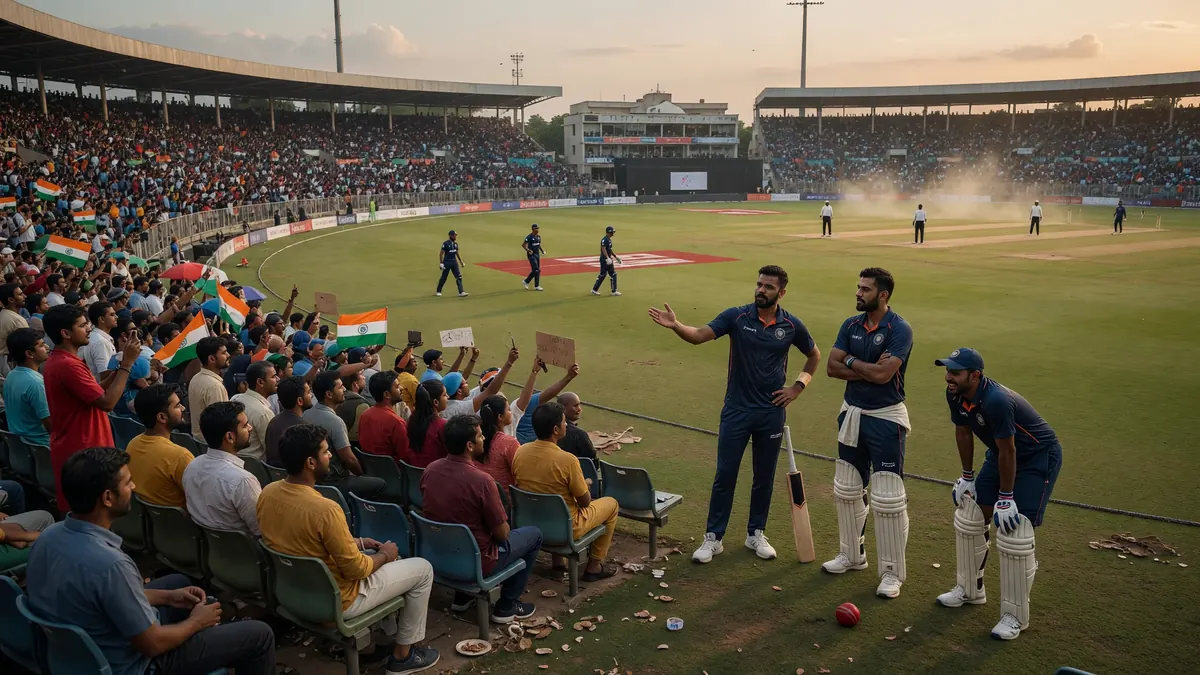
The one-point gap at the summit
Daryl Mitchell remains the No.1 batter in men’s ODIs on 802 rating points. That sentence would be ordinary if the margin under him were still a buffer. It is not. After India’s three ODIs against England, Shubman Gill sits second and is within one rating point of Mitchell.
The series score is settled and simple: England won 2–1. The ranking picture that the ICC published after the rubber is narrower and more awkward for anyone who treats the winner’s trophy as the only form stamp that matters. Gill’s 188 runs across the three matches are the clearest individual lever behind that one-point gap. Virat Kohli is third on 767 points. Rohit Sharma is fourth on 758. Mitchell is alone at the peak; the next three places are an India cluster.
For a white-ball desk that prices batters for bilateral windows and franchise planning, a one-point deficit at No.1 is not trivia. Rating systems tighten and loosen with opposition strength and the band a player already occupies, but they do not invent runs. Gill delivered enough volume in a losing series for the table to compress. The next heavy score for either Mitchell or Gill can change the order without waiting for a multi-month campaign.
Nothing in the release hands Gill the crown. Mitchell’s 802 still leads. The news is how little air remains above second place, and how fully Kohli and Rohit fill the places immediately behind.
Why India’s 2–3–4 matters more than the trophy
Series narratives reward the team that wins two of three. Ranking tables reward recent individual output against competitive bowling. Both stories can be true at once. England took the rubber. India’s best batters still stacked the summit of the official ODI list.
Gill’s second place is the sharp edge of that split. One hundred and eighty-eight runs in three innings is the kind of haul the system is built to notice even when the team result is uneven. Kohli at 767 and Rohit at 758 complete a top-four sandwich that leaves no room for a ceremonial near-miss story about a single name. Any short list of the format’s current elite top-order anchors has to hold Mitchell, Gill, Kohli and Rohit until the next full update moves one of them.
Readers who mostly follow the IPL calendar can treat the cluster as a form stamp rather than a consolation prize. Gill’s place underlines that his present ODI output is not a soft, uncontested home-series artefact. Kohli and Rohit’s places confirm both remain inside the top band of the format after a rubber that finished against their side. None of that rewrites the scorecards England signed. It does reset how tightly the ODI batting summit is packed heading into the next round of bilaterals.
The practical reading is narrow. Until Mitchell’s lead widens again or Gill’s second place cracks, the top of the men’s ODI batting list is a four-name problem rather than a settled hierarchy with clear daylight.
England’s ranking ledger from a 2–1 win
If India’s cluster is the surprise on the batting table, England’s ledger is the receipt for the series result. Joe Root scored 249 runs in the rubber without being dismissed and rose four places to eighth among ODI batters. An undefeated series aggregate of that size is rare at this level; the four-place jump is the formal acknowledgement of it on the global list.
Ben Duckett climbed 11 places to equal 19th. Jacob Bethell rose five places to 64th. Those moves sit in different tiers — Duckett into the edge of the global top 20, Bethell still building a body of ODI evidence — but both track back to the same three-match window in which Root dominated the middle of the card.
On the bowling chart, the England marker is Jofra Archer. Afghanistan’s Rashid Khan remains No.1 among ODI bowlers. Archer moved up one place to third, directly behind second-placed Abrar Ahmed, after taking five wickets across the India series. A single-place rise into third is incremental on the printed table and still meaningful in role terms: Archer is inside the global top three for the format on the latest list.
Read together with India’s batting cluster, the post-series board is not a simple “winners up, losers down” cartoon. England’s best performers rose. India’s best batters also closed on the summit. The middle of the top 20 shuffled because enough batters on both sides posted scores the system cannot ignore.
Bowling table, Axar, and Bracewell’s career-high third
The bowling list mixed England’s series haul with climbs from other recent work. West Indies left-arm spinner Gudakesh Motie rose seven places to equal ninth. Teammate Alzarri Joseph climbed 10 places to 26th. New Zealand’s Michael Bracewell jumped 14 places to 29th among bowlers. India’s Axar Patel moved up 10 places to equal 32nd — a notable spin climb for the losing side of the England rubber and a reminder that individual bowling points do not wait on the series trophy.
Bracewell’s week stretched beyond the bowling chart. Among ODI all-rounders he rose two places to a career-high third, behind Afghanistan’s Azmatullah Omarzai and Bangladesh’s Mehidy Hasan Miraz. A career-high third on the all-rounder list is the cleanest individual landmark in the non-batting half of the update. It pairs with his dual movement on the batting table (up six places to 54th) and the bowling table, which is why his name appears more than once in any honest readout of the cycle.
Axar’s ten-place bowling rise sits in a different conversation from Gill’s one-point batting chase, but it belongs to the same published release. India did not leave the rankings window empty-handed outside the top-order cluster.
Movers outside the England–India window
Not every name on the batting update came from the England–India ODIs. The same cycle credited New Zealand’s Michael Bracewell (up six places to 54th among batters) and Mark Chapman (up 10 places to 62nd) after their efforts against West Indies. Those climbs are separate from the 2–1 rubber and still part of the list as it stands today.
Keeping the windows distinct matters. Collapsing every mover into the England series invents a causal story the release does not support. The accurate reading is a multi-series rankings cycle: one bilateral supplied Gill, Kohli, Rohit, Root, Duckett, Bethell and Archer; another supplied Chapman’s batting jump and part of Bracewell’s multi-list rise; the West Indies bowling gains for Motie and Joseph sit alongside Axar’s climb from the India series.
For anyone scanning only the India batting headlines, those parallel moves are easy to skip. For anyone trying to price the global top 30 across formats, they are half the published table.
A separate T20I board after Zimbabwe–Bangladesh
The same ICC cycle refreshed T20I rankings after Zimbabwe and Bangladesh finished their series. These shifts are not caused by the England–India ODIs. They sit in the same publication window and should be read as a second board.
Zimbabwe’s Brian Bennett gained two places to ninth among T20I batters — a new career-high mark on that list. Bangladesh’s Tanzid Hasan rose seven places to 20th. Saif Hassan climbed nine places to 27th.
On the T20I bowling side, Mahedi Hasan moved up four places to 19th and Rishad Hossain eight places to equal 25th. Zimbabwe’s Richard Ngarava jumped 37 places to 32nd, the largest single leap called out in the update. Bangladesh’s multi-player gains sit beside Bennett’s top-10 batting place and Ngarava’s sharp bowling climb.
White-ball form trackers who only open the ODI batting page will miss this board entirely. The verified facts are limited to the places and jumps above; the release does not attach match-by-match scores for every T20I mover in the same way it anchors Gill’s 188 and Root’s undefeated 249 in the ODI rubber.
What the table settles for now
Three points follow directly from the verified figures, without stretching past the release.
The ODI batting summit is a four-man problem. Mitchell is still No.1 on 802. Gill is one point away. Kohli and Rohit sit third and fourth on 767 and 758. Any short list of the format’s in-form top-order anchors has to hold all four until the next full update.
England’s series win has a rankings receipt beyond the trophy. Root’s undefeated 249 and jump to eighth, Duckett’s rise to equal 19th, Bethell’s five-place climb, and Archer’s move to third among bowlers are the formal traces of a 2–1 result.
Secondary lists still moved. Axar’s bowling rise, Bracewell’s all-round career high, Motie’s entry into the bowling top-10 band, Chapman’s batting climb after West Indies, and the Bangladesh–Zimbabwe T20I churn mean the week was wider than a single bilateral. Reading only the India batting cluster misses half the published table.
What the numbers do not settle is the next change of order. The release does not name the next ODI fixture that will feed the table, and this desk will not invent one. The factual picture is already dense enough: England won the ODI series 2–1; Gill is one rating point from ODI batting No.1; Kohli and Rohit complete an India 2–3–4; Root and Archer head the England ranking gains; Bracewell’s all-round third is the cleaner career-high on the non-batting charts; and the T20I list shifted on the back of Zimbabwe against Bangladesh, not on the back of the England rubber.
Match reporting, squad notes and ranking follow-ups from the same desk continue at the cricket news desk as each verified piece lands.
FAQs
Who is No.1 in the ICC Men’s ODI batter rankings after the update?
Daryl Mitchell of New Zealand remains No.1 with 802 rating points. Shubman Gill is second, one rating point behind.
Where do Kohli and Rohit sit on the ODI batting list?
Virat Kohli is third on 767 points. Rohit Sharma is fourth on 758 points.
What was the result of the England–India ODI series?
England won the three-match series 2–1.
How many runs did Gill and Root score in the series?
Shubman Gill scored 188 runs across the three ODIs. Joe Root scored 249 runs without being dismissed and rose to eighth among ODI batters.
Who leads the ODI bowling rankings, and where is Jofra Archer?
Rashid Khan remains No.1 among ODI bowlers. Jofra Archer rose one place to third, behind Abrar Ahmed, after taking five wickets in the India series.
What was Michael Bracewell’s all-round landmark?
Bracewell rose two places to a career-high third among ODI all-rounders, behind Azmatullah Omarzai and Mehidy Hasan Miraz.
Which T20I rankings moved in the same cycle?
After Zimbabwe vs Bangladesh, Brian Bennett rose to ninth among T20I batters. Tanzid Hasan and Saif Hassan climbed among batters; Mahedi Hasan, Rishad Hossain and Richard Ngarava moved among bowlers, with Ngarava up 37 places to 32nd.